
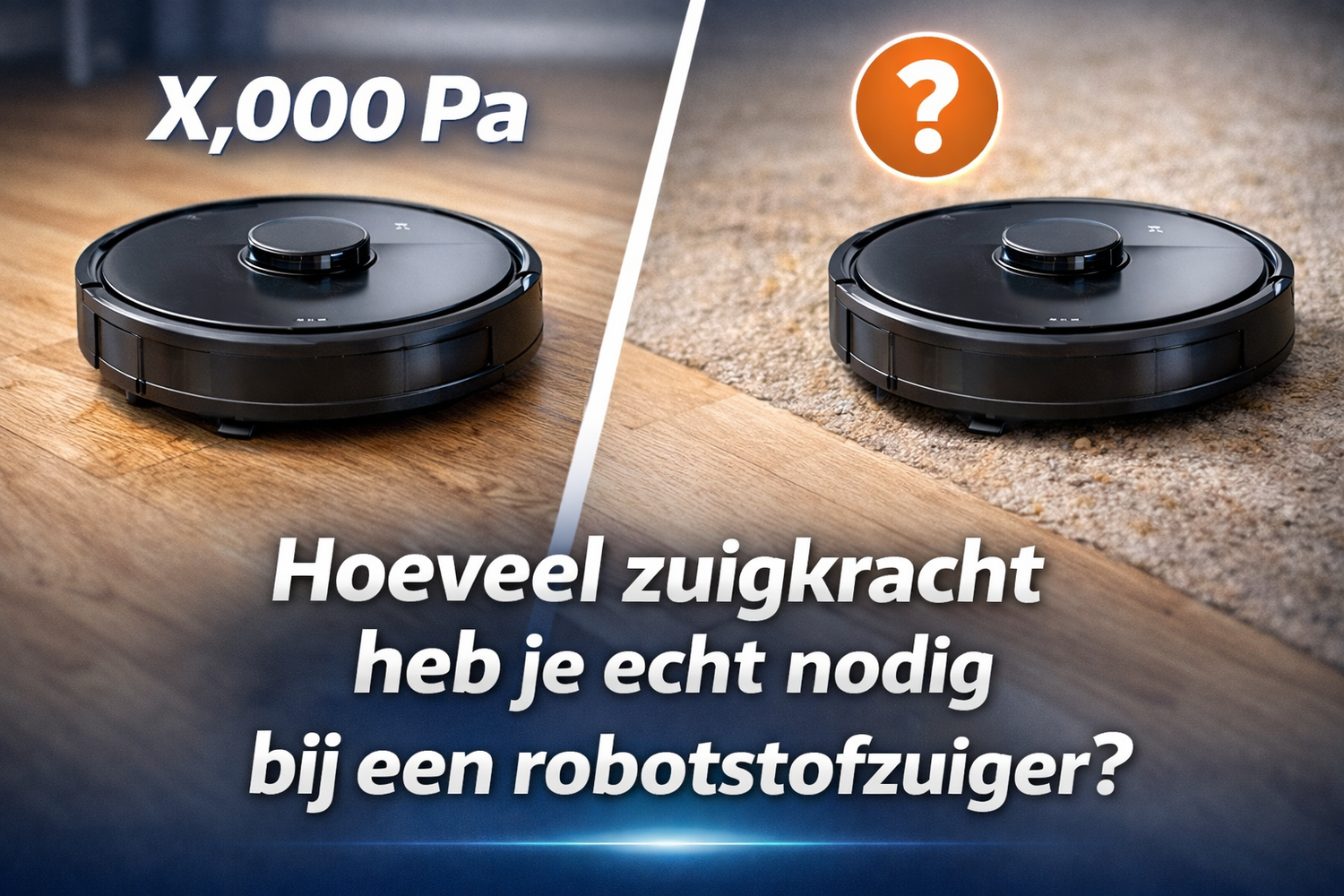
How much suction power do you really need in a robot vacuum?
Many people look for a robot vacuum and first check the Pa number. Logical — more sounds better. But in practice, you don't always need the highest suction power. For most households, it's not about extremely high figures, but about consistent performance, smart design, and daily results.
What does suction power actually mean?
Suction power indicates how powerfully a robot vacuum cleaner can pick up dirt, dust, and hair. Manufacturers often express this in Pa (Pascal). That seems like a useful comparison, but it doesn't tell the whole story.
Because a robot vacuum with a higher number isn't automatically better in your home. The actual cleaning performance also depends on how air flows through the device, how well the suction port or brush picks up dirt, how clean the filter is, and what type of floor you're using it on.
Why a high Pa number doesn't tell you everything
1. Floor type makes a huge difference
On hard floors like PVC, laminate, tiles, or wood, extremely high suction power is often less important than on carpet. Crumbs, dust, and hair tend to sit more "on top" of the floor and are easier to pick up.
2. Brushes and suction port are just as important
A cleverly designed robot vacuum often picks up dirt better than a model that primarily boasts high numbers. Especially with hair and daily dirt, the design of the underside is at least as important as pure suction power.
3. A clogged filter directly reduces performance
Even a powerful robot vacuum performs less effectively if the dustbin is full or the filter is dirty. This causes a loss of the airflow needed for proper cleaning.
4. Daily maintenance is different from deep cleaning
A robot vacuum is at its best when it runs frequently. You usually don't buy it for one heavy cleaning session, but to keep dirt under control and your floor tidy daily.
What suction power suits your household?
Apartment or average home
Do you live in an apartment or an average family home with mostly hard floors? Then a robot that cleans consistently and reliably is usually sufficient. In this case, a practical model is more beneficial than an extremely powerful model with features you barely use.
Pets in the house
With dog or cat hair, suction power becomes more important, but even here: anti-tangle design, good airflow, and regular emptying are at least as crucial. A robot that picks up hair daily often works better than a robot that's only impressive on paper.
Mix of hard floor and low-pile carpet
Do you have a combination of floors? Then a model with decent, consistent suction power is useful. You're primarily looking for balance: good enough for carpet, but also efficient and practical on hard floors.
Lots of carpet or heavily soiled floors
Do you have a lot of carpet, a lot of tracked-in dirt, or a larger home with more challenges? Then extra suction power is indeed more relevant. In such situations, it pays to look at more powerful or premium models.
When are you actually paying too much for suction power?
This happens more often than people think. Especially if your home mainly consists of hard floors, you don't have thick carpets, and you use the robot vacuum for normal daily dirt.
In such cases, you might primarily be buying an impressive spec sheet, while in daily use, you would benefit more from simplicity, reliability, and a model that is easy to maintain.
What do most people really need?
Most households don't need an extremely powerful robot vacuum cleaner. They need a robot that:
- effectively keeps dust and crumbs at bay daily
- neatly picks up hair without much fuss
- can get under furniture
- is practical to use and maintain
- offers good value for money
And this is precisely where buying advice often goes wrong: people compare by the highest number, when they should actually be comparing by suitability for their home.
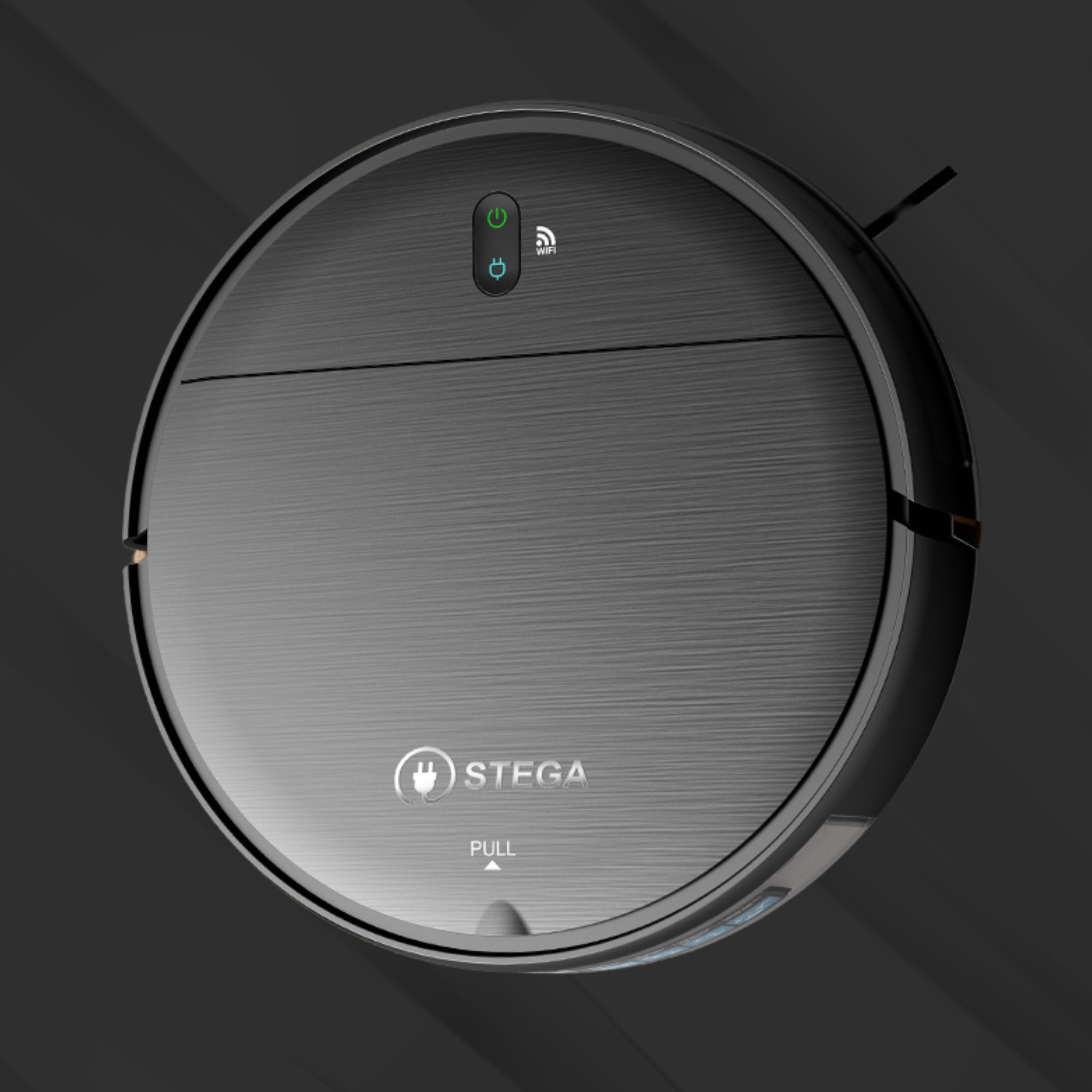
Why the STEGA RoboCleaner 1400 has enough suction power for many households
The STEGA RoboCleaner 1400 is interesting for people who are not looking for an excessively expensive robot, but do want a model that seriously tackles daily dirt. This robot is particularly strong for households seeking convenience on hard floors and in average living spaces.
What works in its favor
- Consistent suction power for daily dust, crumbs, and hair
- Compact design that easily gets under furniture
- Suitable for households with pets
- Anti-tangle design without unnecessarily complicated maintenance
- Practical choice for those who value price-quality
Who this is a good fit for
- Apartments and average homes
- Hard floors and low-pile carpet
- Daily maintenance rather than heavy deep cleaning
- People who prefer simplicity over luxurious extras
For whom more suction power IS smart
Extra powerful models become more interesting if your situation is more demanding than average. For example, if you:
- have a lot of carpet in your home
- have multiple pets that shed a lot
- have a large home with a lot of daily dirt
- seek maximum automation and have a larger budget
In that case, a premium robot might be a better match. But for many people, it's simply not necessary.
The smartest way to choose
Don't just ask yourself: "How high is the suction power?"
Mainly ask yourself:
- Do I have hard floors or a lot of carpet?
- Do I have pets?
- Do I want daily maintenance or maximum deep cleaning?
- Am I looking for convenience and value for money, or all luxury features?
With these questions, you usually make a much better choice than by only looking at a big number on the product page.
Summary
How much suction power you truly need in a robot vacuum depends on your home and your expectations. For most households:
- extremely high suction power is often not necessary on hard floors
- with pets and carpet, extra power becomes more important
- brush design, airflow, and maintenance are just as important as the Pa number
- daily results are more important than impressive specifications
Are you looking for a practical robot vacuum for daily use, with excellent value for money? Then the STEGA RoboCleaner 1400 is a logical choice for many households.



Leave a comment
This site is protected by hCaptcha and the hCaptcha Privacy Policy and Terms of Service apply.