
Robot Vacuum for Carpets and Thresholds: Where Do Things Often Go Wrong?
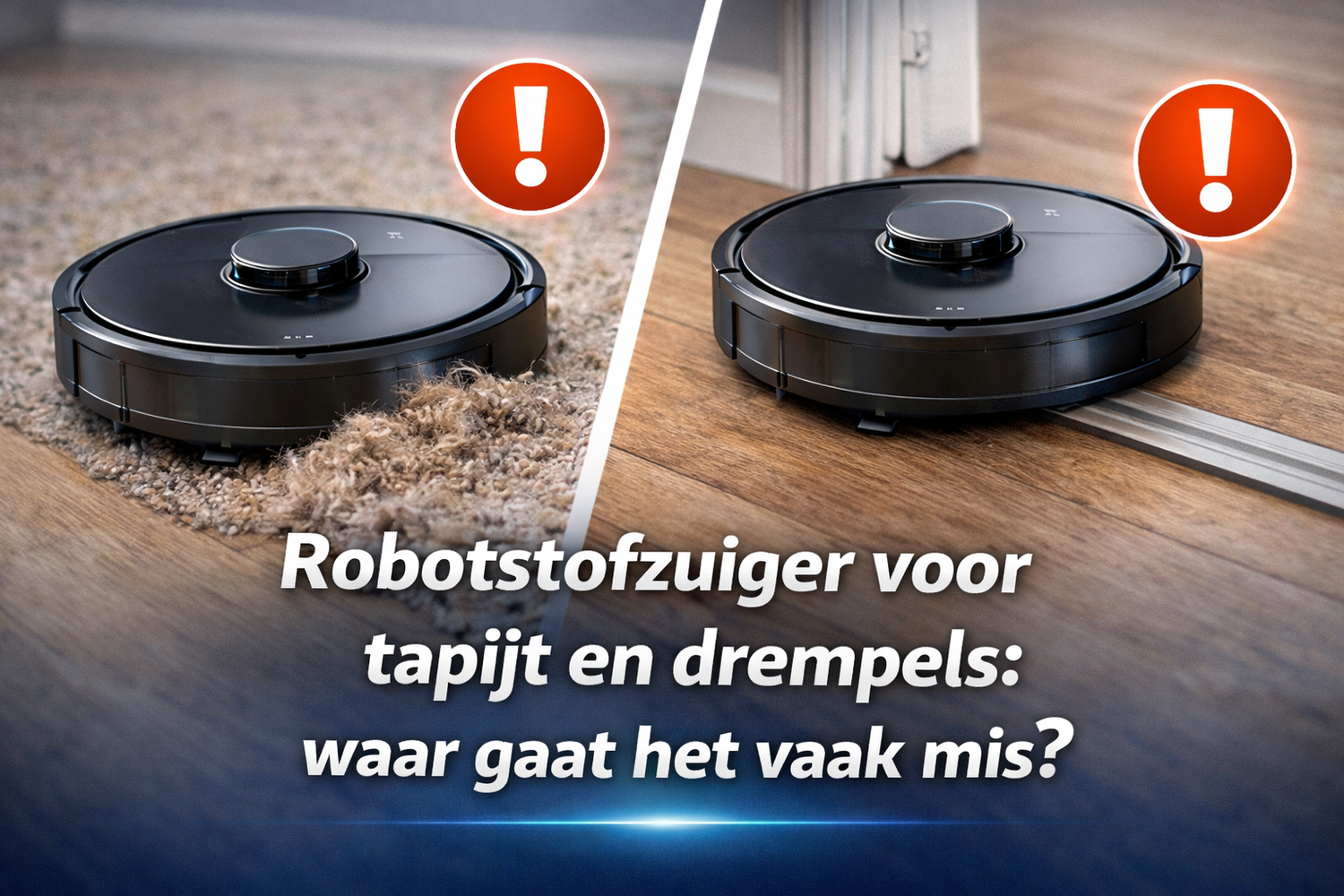
A robot vacuum that runs perfectly on a hard floor can suddenly struggle on carpet or at thresholds. Not because it's immediately a bad robot, but because in practice, changes in height, rug edges, and rougher surfaces demand much more from navigation, grip, and design. In this guide, you'll read where things often go wrong — and what to look out for before you buy.
Why carpets and thresholds are trickier than they seem
On a smooth floor, a robot vacuum moves relatively easily. It encounters less resistance, fewer height differences, and less chance of getting stuck. With carpets and thresholds, that changes immediately.
Carpet requires more grip and often more suction power. Thresholds, on the other hand, require sufficient climbing ability, smart wheels, and a logical approach angle. As soon as rug edges, fringes, or multiple transitions are added, many models fail.
Here's where things most often go wrong
1. The carpet is too high or too soft
Not every carpet is robot-friendly. High-pile carpet, thick rugs, or soft edge finishes tend to create more resistance. The robot then has to work harder, moves less stably, or avoids the surface altogether.
- High-pile carpet creates more resistance
- Soft edges can curl up
- Thick rugs feel like an obstacle to some robots
2. The threshold is just too high
This is a classic. Many households think: "That mini-threshold should be manageable, right?" But in practice, that small height difference is often the line between smooth passage and endlessly pushing.
- A too-steep approach makes climbing difficult
- Narrow hard edges provide less grip
- Transitions between rooms then become unpredictable
3. The robot gets stuck on rug edges or fringes
Loose edges, raised corners, and decorative fringes are notorious. They can get stuck under the robot or disrupt its route. Then it seems as if the robot is navigating poorly, while the floor covering is the real problem.
4. Carpet and mopping are combined incorrectly
With a robot vacuum cleaner with a mopping function, things often go wrong if users don't think about where the device is driving. A mopping pad and carpet are not always an ideal combination, especially if you have many transitions in your home.
5. Too much is expected from one robot in every home
A robot vacuum cleaner can do a lot, but it's not equally powerful in every home. Do you have many rooms, multiple thresholds, many carpets, and height differences? Then you need to choose more critically than in a home with mostly smooth floors.
What should you look for if you have carpets in your home?
Low-pile or high-pile?
Low-pile carpet is usually much more robot-friendly. The thicker and softer the carpet, the greater the chance of problems with movement, dirt pickup, or getting stuck.
How are the edges?
A taut, flat rug is much more suitable than a rug with loose corners or fringes. The edge finish often makes more difference in practice than people think.
Is carpet a primary surface or a small part of the home?
Do you mainly have hard floors and only a few rugs? Then a practical all-round robot is often enough. Does a large part of your home consist of carpet? Then grip, suction power, and passage become more important.
What should you look for with thresholds?
Measure the height honestly
Many buying mistakes start here. Don't look "approximately," but actually measure the threshold. What seems small to the eye can be just too much for a robot vacuum cleaner.
Look at the shape, not just the height
A sloping transition is much easier than a short, hard, raised edge. Material also plays a role: wood, metal, and plastic don't always provide the same grip.
Think in routes, not in separate rooms
A robot vacuum cleaner doesn't just have to cross one threshold, but often several transitions in a row. Then the entire route counts: living room, hallway, kitchen, and back to the charging station.
For whom does a simple robot vacuum often work perfectly?
For many households with mainly hard floors, some low-pile carpet here and there, and normal room transitions, a simple robot vacuum is already an excellent solution. Especially if you are mainly looking for:
- less dust and crumbs daily
- ease of maintenance
- an affordable choice
- automatic cleaning without excessive luxury
When do you need more?
A more powerful or extensive model becomes more interesting if your home is much more challenging than average. For example, when you have:
- multiple high thresholds
- a lot of carpet or thicker rugs in the house
- need more grip and power on transitions
- want to manually adjust as little as possible
In such situations, a premium model may be more logical. Not because expensive is always better, but because your home simply demands more.
Why the STEGA RoboCleaner 1400 makes sense for many homes
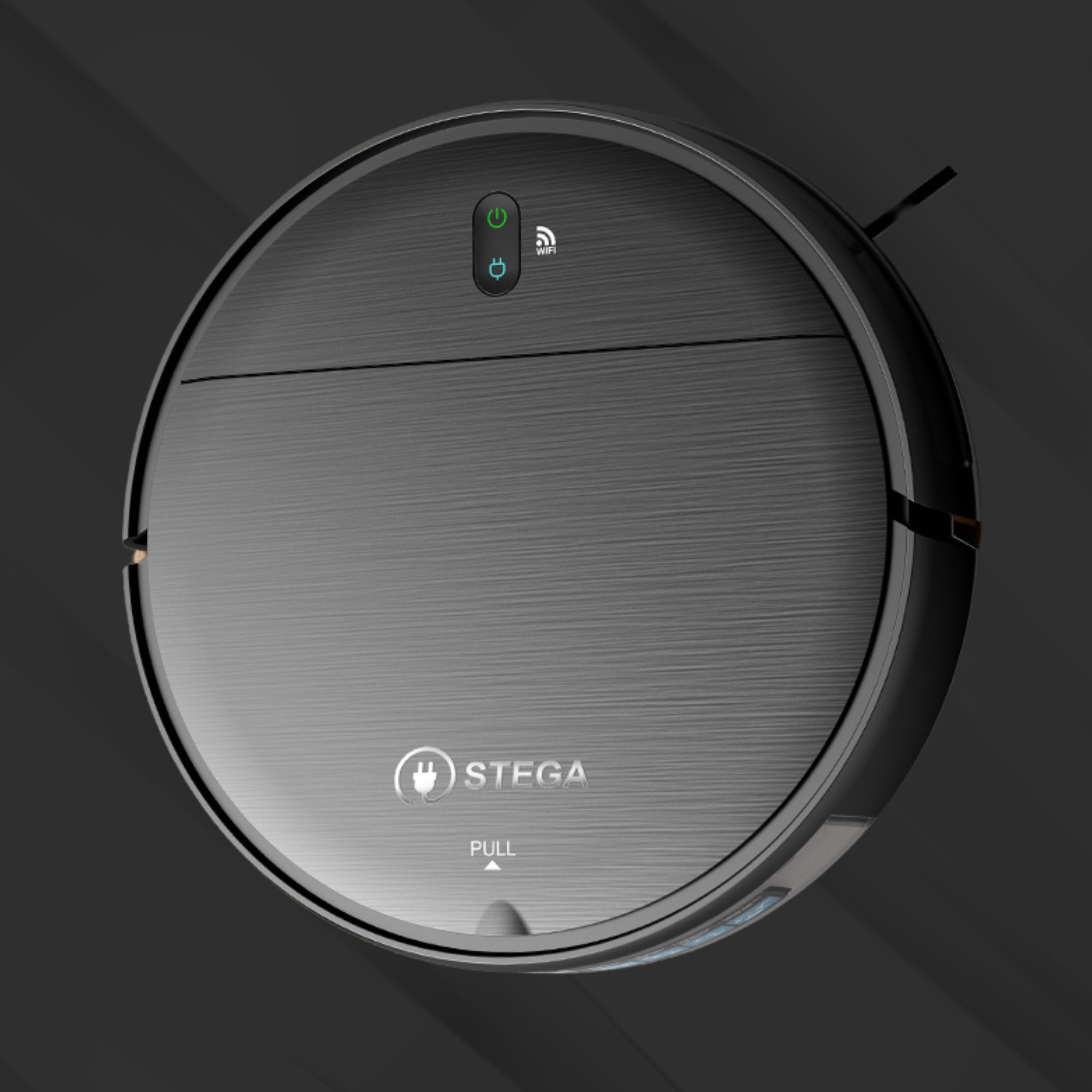
The STEGA RoboCleaner 1400 is particularly interesting for households looking for a practical robot vacuum for daily maintenance on hard floors and low-pile carpet. This is not a model you should buy because it "can handle everything," but precisely because it is a smart and affordable choice for many ordinary homes.
Where it excels
- Apartments and average homes
- Hard floors with some low-pile carpets
- Daily dusting, crumb, and hair removal
- Users who prioritize simplicity over maximum luxury
When you need to look more realistically
- With high-pile carpets
- With many tricky rug edges or fringes
- With multiple higher thresholds in the house
- If you expect maximum performance on every surface
Common mistake when purchasing
The biggest mistake? Thinking that "suitable for carpet" automatically means that every carpet, every transition, and every threshold will work flawlessly. In reality, the difference often lies in details of your home that you only notice once the robot is already in your house.
That's why this is one of the smartest questions you can ask yourself before buying: is my house mainly simple, or are there many small obstacles that make a difference for a robot vacuum cleaner?
Summary
With carpets and thresholds, things often go wrong due to:
- too thick or too soft carpet
- rug edges and fringes
- thresholds that are just too high
- too many height differences in one route
- unrealistic expectations of one robot
Are you looking for a robot vacuum cleaner for a home with mainly hard floors and low-pile carpet? Then the STEGA RoboCleaner 1400 is a practical choice for many households. Do you have many challenging transitions, thick rugs, or higher thresholds? Then it's smart to compare more critically before you buy.



Leave a comment
This site is protected by hCaptcha and the hCaptcha Privacy Policy and Terms of Service apply.