
Why do streaks appear with a robot window cleaner – and how can you prevent them?
A robot window cleaner can clean your windows beautifully, but sometimes streaks remain. This usually doesn't mean the robot isn't working properly. In practice, streaks often arise from a few simple causes: too much or too little liquid, dirty cloths, dirt in the window frame edges, or a window that is simply too dirty for one quick pass.
Why do you get streaks?
A robot window cleaner doesn't "magically" clean every window perfectly in one go. Just like with manual window cleaning, the result depends on the circumstances. If there is dust, sand, grease, or old rain residue on the glass, the robot must first dislodge and absorb it.
As soon as too much dirt is spread across the glass at once, you'll see haziness or streaks more quickly. This is especially true for windows that haven't been cleaned for a long time.
The most common causes of streaks
1. The microfiber cloths are dirty or saturated
This is one of the biggest causes. A robot window cleaner works with cloths that absorb dirt. If they are already full of dust or grease, they will spread the dirt rather than absorb it.
- Use clean cloths for each serious cleaning round
- Change cloths in time
- Wash them regularly for a fresher result
2. Too much spray has been used
More liquid sometimes seems better, but that's not always the case. Too much spray can lead to drips and an uneven result. The dirt will then slide across the window rather than being neatly absorbed.
3. The window frame or edges are still dirty
Many people focus on the glass but forget the edges. Yet, that's precisely where dust and sand accumulate. If you start the robot on a window with dirty frame edges, it will quickly drag that dirt across the glass.
4. The window is too dirty for one round
For heavily soiled windows, one round is sometimes not enough. Think of dried rain streaks, pollen, grease, or grime. In such cases, a first round is primarily intended to loosen the worst dirt, and a second round to really clean the window neatly.
5. Incorrect or unsuitable cleaning fluid
Not every liquid works equally well with a robot window cleaner. A good glass cleaner or a suitable cleaning fluid helps to clean more evenly and reduce streaks.
How to prevent streaks step by step
Step 1: start with clean cloths
This is the simplest win. Clean microfiber cloths make an immediate difference. Especially for larger windows or multiple windows in a row, it pays to have extra cloths on hand.
Step 2: roughly clean window frames and edges first
A quick wipe along the edges with a dry cloth or soft brush prevents loose dirt from immediately spreading across the glass.
Step 3: do not use too much liquid
Prefer to work with a light, even spray rather than a window that's too wet. With a robot window cleaner, it's about controlled cleaning, not about using as much moisture as possible.
Step 4: for very dirty windows, run two rounds
The first round removes most of the dirt. The second round often provides the truly neat final result.
Step 5: replace or wash cloths in time
Do you notice the result diminishing? Then it's often due to the cloths rather than the robot itself.
What works best for large windows or sliding doors?
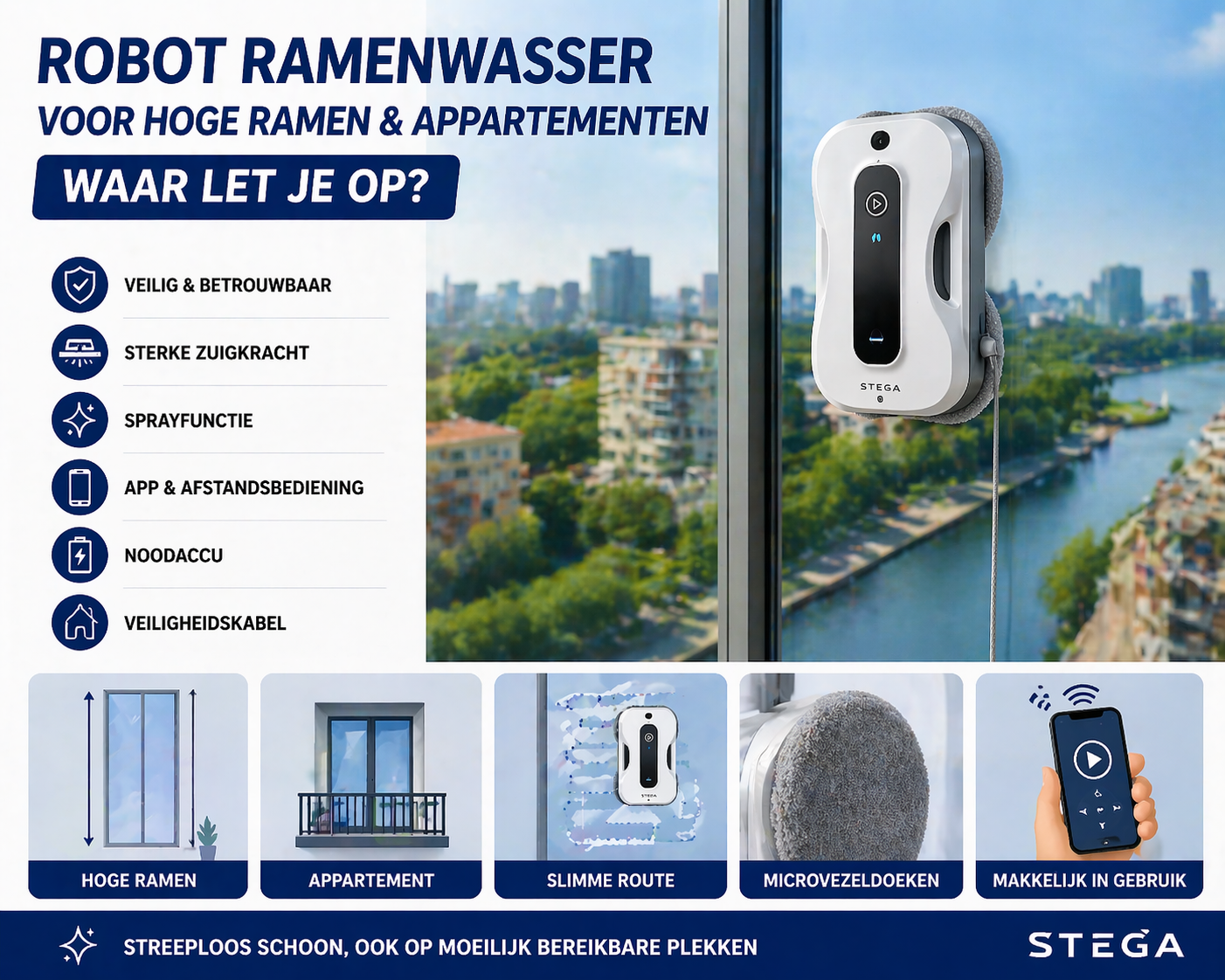
For larger glass surfaces, you'll notice the difference between a basic approach and a neater preparation more quickly. Clean cloths, a good spray function, and a consistent working method become even more important here. This is precisely why models with a spray function and microfiber cloths are often more pleasant for larger windows.
When is it due to preparation – and when to the model?
In most cases, it's more about preparation and maintenance than the device itself. Streaks are often a user problem, not a sign that a robot window cleaner "isn't working."
Only when you work with clean cloths, good liquid, clean edges, and realistic expectations can you properly assess which model best suits your windows.
Which STEGA models are interesting here?
At STEGA, you'll see on the product pages that the spray function and microfiber cloths are explicitly part of the cleaning result.
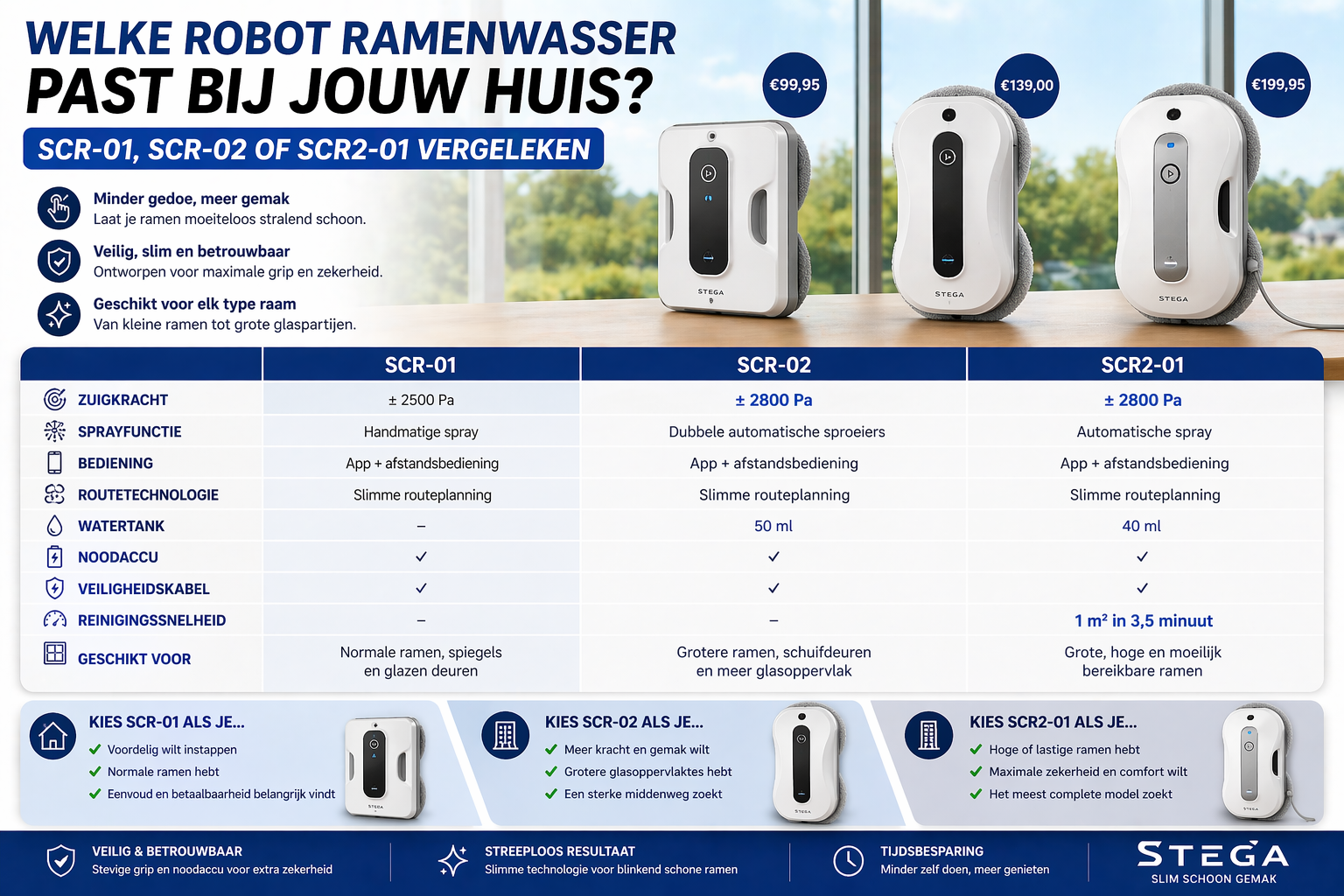
SCR-01
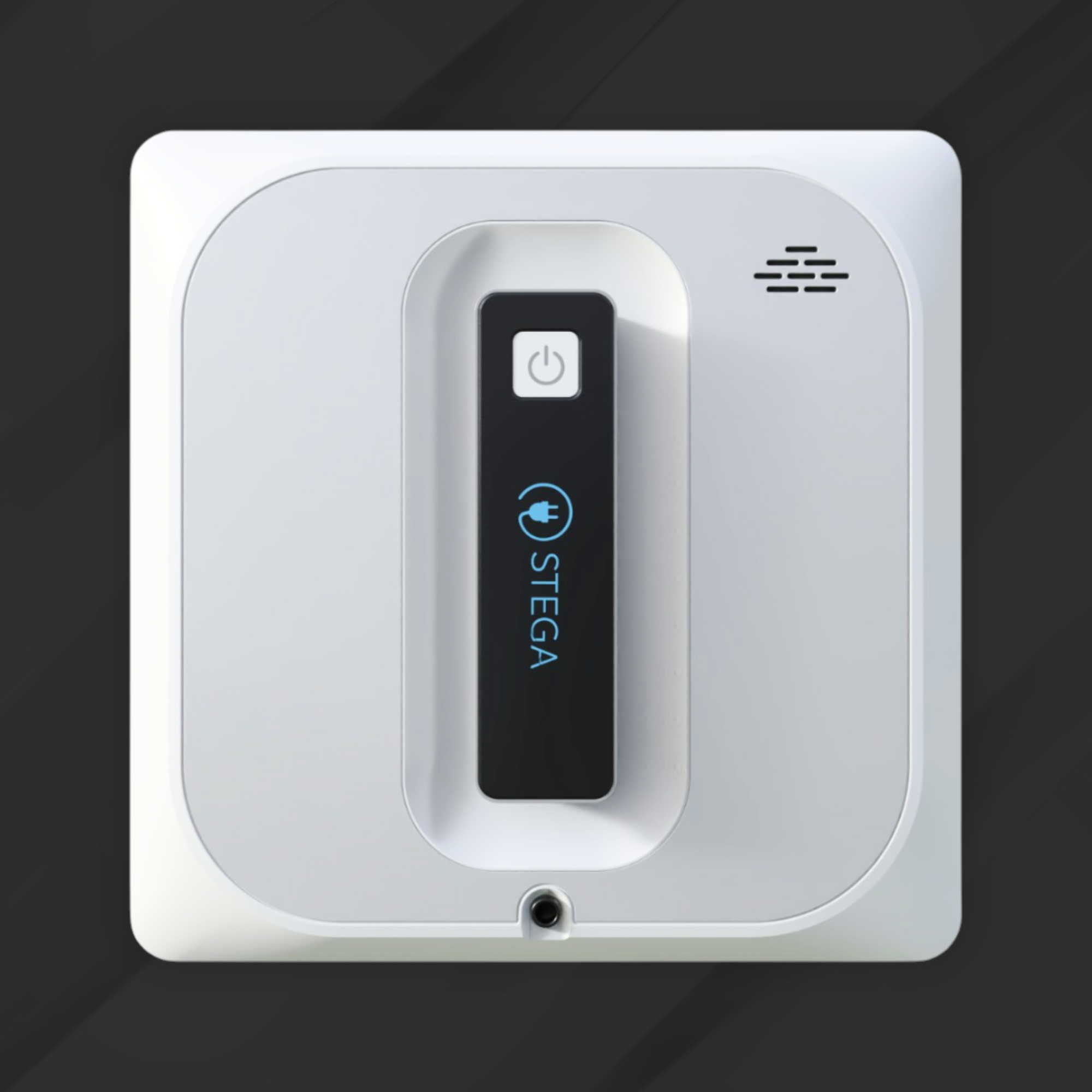
The SCR-01 is an interesting accessible entry point for normal home use. Ideal if you're primarily looking for a practical robot window cleaner without going straight for the highest segment.
SCR-02
The SCR-02 is attractive if you want more comfort for larger windows or more frequent use. The combination of spray function and microfiber cloths makes it particularly interesting for a neater, more even result.
SCR2-01
The SCR2-01 is particularly interesting if you have larger, higher, or hard-to-reach windows and want as much certainty and ease of use as possible.
Don't forget the cloths
Anyone who really wants to reduce streaks shouldn't just look at the robot but also at the accessories. Extra or clean microfiber cloths often make more difference in practice than people think.
Therefore, also check out the right STEGA microfiber cloths for your model.
Summary
Streaks with a robot window cleaner usually arise from:
- dirty or saturated microfiber cloths
- too much spray or dripping
- dirty window frame edges
- windows that are too dirty for one round
- an unsuitable cleaning fluid
Want fewer streaks? Then work with clean cloths, prepare the window well, and use your robot window cleaner regularly instead of only for heavily soiled windows.
View all STEGA window cleaners

Leave a comment
This site is protected by hCaptcha and the hCaptcha Privacy Policy and Terms of Service apply.